My photo
Lima, Lima, Peru
INGENIERO QUÍMICO HERWARTH RONALD MORALES CHUMACERO - CIP 74980.
Showing posts with label energy. Show all posts

Monday, August 6, 2018

Una propuesta para recortar las facturas eléctricas victorianas

Una propuesta para recortar las facturas eléctricas victorianas forzando a las compañías energéticas a ofrecer una "oferta básica de servicios básicos" enfrenta una feroz resistencia de los minoristas de energía renovable, quienes se han lanzado a una advertencia reciente del regulador australiano de la competencia de que expulsará a operadores más pequeños negocio.

La Comisión Australiana de Competencia y Consumo advirtió al gobierno de Andrews que existen "riesgos significativos" al adoptar una oferta de servicios básicos, incluyendo que "puede llevar a que algunos minoristas salgan del mercado, lo que reduce las opciones para los consumidores".

El regulador argumentó en un informe a fines del mes pasado que la reciente aparición de estrategias innovadoras, como la gestión de la demanda, que premia a los clientes para que se apaguen en el momento pico, hará más para reducir las facturas que una tarifa fija impuesta por el gobierno.

Los defensores de los desfavorecidos también temen que la propuesta pueda elevar los precios de la energía para los que menos pueden pagarla, con la Sociedad de San Vicente de Paul instando al gobierno de Andrews a andar con cuidado antes de volver a regular el mercado minorista de electricidad de Victoria.

Gavin Dufty es jefe de política en San Vicente de Paúl y dijo que existe el riesgo de que la oferta de servicios básicos aumente gradualmente en el costo a lo largo del tiempo, lo que finalmente aumentará el número de personas que están desconectadas

Thursday, April 5, 2018

Google says it’s the biggest corporate buyer of renewable energy on the planet


Google now has contracts to buy 3 gigawatts of output from renewable energy projects.The search giant says it will carry on signing contracts to purchase more renewable energy.


Google's total purchase of energy from renewable sources in 2017 was greater than the electricity used by its global operations, the tech giant has said. This follows on from a 2016 announcement that the business was on target to buy enough renewable energy to "match" electricity usage.

In a blog post Wednesday, Google's Senior Vice President for Technical Infrastructure, Urs Hölzle, described what the business meant by "matching." Put simply, for every kilowatt hour of electricity the company used in 2017, it bought a kilowatt hour of renewable energy from a solar or wind farm built specifically for Google.

Hölzle said that Google now had contracts to buy 3 gigawatts of output from renewable energy projects, and that no corporate purchaser was buying more renewable energy than Google. Renewable energy contracts for Google had resulted in more than $3 billion in new capital investment across the globe, he said.

"We say that we "matched" our energy usage because it's not yet possible to "power" a company of our scale by 100 percent renewable energy," Hölzle explained.

"It's true that for every kilowatt-hour of energy we consume, we add a matching kilowatt-hour of renewable energy to a power grid somewhere," he added. "But that renewable energy may be produced in a different place, or at a different time, from where we're running our data centers and offices."

What was important to Google, he said, was that it was adding "new clean energy sources to the electrical system" and buying renewable energy in the same volume that it was consuming both globally and on a yearly basis.

Looking forward, Hölzle said that Google would carry on signing more contracts to buy renewable energy. 

The search giant is among a number of technology businesses looking to "green" their operations with big, ambitious projects. Last October, for instance, Amazon announced that its biggest wind farm to date was operational.

The business said that Amazon Wind Farm Texas would add over 1 million megawatt hours of clean energy to the grid annually. The facility, which is located in Scurry County, has over 100 turbines, each standing more than 300-feet tall and with a rotor diameter over double the wingspan of a Boeing 787.


Wednesday, March 28, 2018

SoftBank y Arabia Saudita crearán el mayor proyecto de energía solar del mundo


El complejo creará 100.000 empleos y ahorrará a la monarquía 40.000 millones de dólares en costes de generación energética.

La compañía de inversiones japonesa SoftBank y Arabia Saudita planean aprovechar los rayos de Sol que caen sobre Oriente Medio para lanzar un proyecto de 200.000 millones de dólares que emplearía esa energía.

Este 27 de marzo, el príncipe heredero saudita, Mohamed ben Salmán, y el presidente y consejero delegado de SoftBank, Masayoshi Son, firmaron un memorándum de entendimiento en Nueva York (Estados Unidos) sobre el que podría convertirse en la mayor iniciativa de energía solar del mundo, informa Reuters.

El complejo alcanzaría una potencia de 200 gigavatiospara 2030, en comparación con los cerca de 390 gigavatios de capacidad de energía nuclear que el mundo registró a finales de 2016.

Arabia Saudita quiere convertirse en potencia mundial en producción de energía solar

La inversión inicial será de 5.000 millones de dólares —de los cuales 1.000 millones procederán de un fondo de SoftBank— y el resto surgirá de préstamos, que los desarrolladores esperan pagar con las ganancias que genere la venta de electricidad.

Esa iniciativa, que busca aportar diversificación económica a la monarquía petrolera, supondría construirparques solares a lo largo de Arabia Saudita y una enorme batería para almacenar la energía generada por los paneles. Son estima que creará 100.000 empleos y le ahorrará a Riad 40.000 millones de dólares en costes de generación eléctrica a base de crudo.

La instalación de los primeros paneles solares comenzará este año, mientras que está previsto que a mediados de 2019 arranque la generación eléctrica. Los primeros dispositivos de captación energética serán importados, pero los constructores planean lanzar la producción interna de todos los equipos necesarios dentro de un par de años.

Monday, March 26, 2018

This Brooklyn Architect Wants to Rewire Puerto Rico with Solar


The sixth-month anniversary of Hurricane Maria’s grinding-up of Puerto Rico brought what might feel like good news. According to AEE, the Electrical Energy Authority, almost 93 percent of Puerto Ricans—1,365,065 people—now have power. The process has been agonizing—a misguided early repair contract to the unlikely Whitefish Energy for $300 million got cancelled, and it took months for crews from better-suited firms to get started. Financial problems, logistical difficulties, and a weird reluctance on the part of the federal government to make Puerto Rico a priority all extended the timeline.

The work is far from over. Thousands of people are still without water and power, and suffering—especially in rural areas—goes on. But in the midst of that tumult and travail, some technologists see opportunities for innovation. Puerto Rico’s energy infrastructure was falling apart even before the hurricane. So lots of folks are advocating solar power systems as a jump into the future. Earlier this month, the design-driven nonprofit Resilient Power Puerto Rico announced it would receive grants of $625,000, with which the group plans to construct 25 of a planned 100 small, commercial-scale solar arrays—with an eye toward revamping pieces of the island’s grid.

Resilient Power Puerto Rico is itself powered, in part, by Jonathan Marvel, an architect perhaps best known these days for beautiful hipster remodels in Brooklyn. But Marvel’s father Thomas was one of the islands most important architects. “I was without a lot of knowledge about solar or electrical engineering, but because of the hurricane, and being born and raised here—I have an office in San Juan as well as new York—it became a matter of pride and responsibility to try to power up Puerto Rico,” Marvel says. His pedigree goes back even farther; Marvel’s great uncle was famed designer Buckminster Fuller, of geodesic domes, Dymaxion cars, and the early sustainability philosophy of Spaceship Earth.

“We started by bringing solar generators and batteries, because the governor said we could install them without having to go through a permitting process during the relief and recovery period,” Marvel says. Instead of homes, Marvel installed solar panels at the community centers common in smaller municipalities, where people already gathered and could share the power. “If we could power up community centers, we could power up the island.”

Resilient Power Puerto Rico isn’t the only group working on solar. (Naomi Klein has a terrific article in The Intercept about this movement.) It has installed six community center arrays so far—20 panels each, with two Tesla batteries (one for backup), each capable of supplying 5 to 6 kWh. It’s not enough to run an air conditioner all day, but it’ll run water filters, pumps, and charging stations for phones and radios. “The beauty of the Powerwall, which is what we’re installing, is that it’s super-efficient. It occupies very little space, hangs on existing block wall so that there’s more space left for activities,” Marvel says.

That’s not a replacement for a traditional power grid, of course. AEE says repair crews have brought in 6,647 new transformers, 45,200 poles (with thousands more on the way), and 19,000 miles of cable to get power from generation facilities—running on coal or oil—to users. The last mile is always the hardest; Puerto Rico’s power utility Prepa had serious financial woes even before Maria, which slowed things down, and the hurricane did some of its heaviest damage in remote areas where transmission lines carried power from generating facilities to population centers.

A December report from Prepa and the New York Governor’s Office, among others, said that $17.6 billion over the next ten years could completely revamp Puerto Rico’s aged grid. The model might be what New York did on Long Island after Hurricane Sandy, hardening infrastructure against storms with flood barriers and elevated platforms while upgrading traditional transmission and distribution lines. But the report also recommends switching 10 percent of the system to “microgrids,” solar panels with battery storage that could provide backup power to critical infrastructure like hospitals, as well as rural areas.

Solar can’t replace an island-wide grid; it’s not efficient enough yet, even in a place that gets as much sun as Puerto Rico. Solar-plus-batteries helps, because the sun can literally charge the batteries for a rainy day—or for nightfall. Batteries smooth out peaks and valleys in output. “To be clear, it’s still cheaper to serve most of the population with grid electricity, but for facilities where resilience is super-important, like a fire station or a wastewater treatment facility, it makes sense to price in the added cost,” says Varun Sivaram, a science and technology fellow at the Council on Foreign Relations and author of Taming the Sun. “Microgrids are complex systems, but they’ve been built in many places and lots of people have expertise in building them. The primary hurdles are policy and standards.”

Marvel knows that, but he wants to expand the microgrid idea even further—beyond individual buildings to entire municipalities. He was in Puerto Rico a couple weeks ago talking to mayors, hoping to move from the scale of a single building to powering 20,000 people. “As long as we’re not crossing property lines, we can legally create these microgrids,” Marvel says. “Right now it’s all in the engineering and proposal stages. We’re looking for locations to host and opportunities to finance the locations. Because of the interest from the mayors, I don’t think there’s going to be a shortage of places.”

This is the kind of project that fewer people know how to build, but that might have a far greater impact. It’s also, perhaps not by coincidence, the kind of systems-based, sustainable, futuristic Spaceship Earth-type solution that Marvel’s Great Uncle Bucky would probably have approved of. (Putting a geodesic dome over Puerto Rico seems less feasible.)

And if his group can get that stepped-up scale of solar built, it could have a ripple effect—not just in Puerto Rico, but everywhere. “Architects love to talk about scale—the scale of a house, a city, a planet,” Marvel says. “If you can solve things in Puerto Rico, you can solve things on a larger scale as well.”

There’s already evidence of demand. Microsoft, for example, is buying 315 megawatts of solar for its cloud computing facilities in Virginia. “Solar deployed at the scale of communities is a kind goldilocks zone,” Sivaram says. Rooftop solar isn’t always economical, and vast solar installations require new substations and transmission lines, but “solar at a megawatt scale, on the order of serving hundreds of American households, that’s the right scale. But for that to happen it’s got to be integrated into the rest of the electricity grid.”

For now, though, it makes sense to focus on Puerto Rico recovery. The island has at least a few of the resources necessary for a project like this—plenty of fresh water, plenty of sunlight, plenty of labor. What it lacks, of course, is capital. Resilience Power Puerto Rico figures it’ll take $5 million to $10 million to power up a 20,000-person solar grid.

So now Marvel finds himself in a policy role, talking to mayors and potential sources of funding, negotiating property rights. He says he’s just using standard architectural problem solving to help out his childhood home. “Architecture is a profession that sees things holistically, that sees things along the lines of systems dynamics, where everything is interrelated,” he says. “Those are tools we learn in architecture school.”

And even though the efforts to get the power back on with traditional technology seem to finally be seeing success, the clock is ticking. The 2018 hurricane season starts in June.
  •  Overhauling Puerto Rico’s grid won’t be easy, but it’s necessary.

  •  One reason an island territory needs power? To communicate with itself, and the rest of the world.

  •  Hurricane Maria was a disaster with many faces, including a health crisis with dimensions still largely unknown.

Transportation

Nearly half a million people have put down a thousand dollar deposit for a Tesla Model 3 they may not get for years. But once the early production bugs are ironed out, the Model 3 feels like it's going to be a great everyday car.

Thursday, March 22, 2018

Tech giant Microsoft announces massive purchase of solar power in Virginia


Microsoft describes deal as "the single largest corporate purchase of solar energy ever in the United States."Latest announcement follows two renewable energy deals in Singapore and India.


Microsoft is to purchase 315 megawatts (MW) of energy from two new solar facilities in Virginia, it said Wednesday.

The tech giant will buy energy from the Pleinmont I and II sites in what it described as "the single largest corporate purchase of solar energy ever in the United States."

The Pleinmont developments are part of a bigger 500 MW project owned and operated by sPower, an AES and AIMCo business. When operational, Pleinmont I and II will have over 750,000 solar panels covering more than 2,000 acres.

"This project is our second solar agreement in Virginia and allows our Virginia data centers to be powered fully by solar energy," Brad Smith, Microsoft's president, said in a statement Wednesday.

Microsoft's total of directly purchased renewable energy now stands at around 1.2 gigawatts (GW). This, Smith said, was enough power to light 100 million LED bulbs.

More than 10 GW of new solar photovoltaic capacity were installed in the U.S. in 2017, according to a recent report from GTM Research and the Solar Energy Industries Association. Photovoltaic refers to a way of directly converting light from the sun into electricity.

Virginia's governor, Ralph Norman, welcomed Wednesday's news. "When companies like Microsoft invest in Virginia solar, they opt for clean and reliable energy as well as new jobs in the energy economy we are working hard to build," he said.

Microsoft's latest announcement follows recent renewable energy deals in Asia. At the beginning of March, the company agreed to buy all the renewable energy output from a 60 MW solar project in Singapore, its first clean energy deal in Asia. A few days later, it announced it had entered into an agreement to purchase 3 MW of solar-powered electricity in India.


Tuesday, March 20, 2018

Obtaining energy from marine currents


Researchers from Universidad Politécnica de Madrid (UPM) have developed procedures and designs to obtain energy from marine currents in areas of great depths optimizing the costs.

The new devices using the energy from marine currents in great depths pose the problem of high cost of manufacturing, installation and maintenance. To tackle this issue, members of the Technological Research Group in Marine Renewable Energy (GITERM) at UPM have developed a method to assess the life-cycle cost of a power generation park based on these devices that can be used in the early design stages. The procedure has been recently published in the Renewable and Sustainable Energy Reviews.

After a wide development of offshore wind power, experts agree that the next step is the use of the energy from marine currents, mainly produced by the tides. Today, Europe and Canada are starting to install the first experimental parks based on devices set on the seabed, called of the first generation.

It is estimated that about 80% of the energy from tides are located in areas of over 40 meters of depth. Therefore it is necessary to use a new design device that can operate in areas where it is expensive to install first generation devices such as large structures held to the seabed. These systems of the second generation have anchors and a series of cables that hold the device to the seabed.

Amable López is a researcher from the GITERM group at the School of Naval Engineering at UPM and says, "Our GESMEY device, patented by the University, has been the first design worldwide tested in the sea and fit to operate fully submerged. Thanks to the cost analysis tool, we were able to assess diverse design alternatives with a final goal: to reduce as much as possible the production cost of the energy and to make this renewable source both financially and technically competitive, helping fight against climate change."

These economic analyses are added to the development of new anchoring systems that use simpler and more robust systems, such as the ones shown in the article published this year in the Revista Iberoamericana de Automática e Informática industrial. Powerful tools of simulation and control are used to develop these systems, which were also developed by the GITREM group.

Thanks to these procedures and tools, the initial design of the GESMEY device and its anchoring system has evolved from generators with a large rotor (similar to the ones used in wind generators) to generators with several rotors, such as the Hive-TEC device (also patented by UPM) allowing to reduce the estimated cost of the energy produced by 30%.

The research group keeps working to achieve a future successful commercialization of tidal renewable energy devices since they have a great potential to generate power from the marine currents. José Andrés Somolinos, another researcher from GITERM says, "the energy from currents is a renewable source that has an additional value in a future energy market regarding other renewable energy sources due to its high predictability. Besides, tidal energy technologies are characterized by a CO2-free energy that contributes to the economic growth and job creation in coastal and remote areas."

Wednesday, March 14, 2018

Indigenous solar water-purifier, jacket unveiled


New Delhi, March 14 (IANS) Union Environment and Science Minister Harsh Vardhan on Wednesday unveiled a solar water purifier and a solar jacket developed by Department of Science and Technology (DST) indigenously.

Offficials said that so far five prototypes of solar water purifiers of 500 litre capacity and 20 prototypes of the solar jacket customised for the Forest Department staff and others have been developed.

"One prototype has been installed here, while the other four prototypes of the solar water purifiers are installed at four different schools in Tripura and Assam, where electricity couldn't reach due to difficult terrain," innovator Prof S.P Gon Chaudhury, from DSE, told IANS.

The 4-watt powered water-proof solar jacket, that comes in camouflage pattern, has solar panels at its rear side and a battery attached inside, to help charge mobile phone and GPS. Beside a LED powered torch on the front and a illuminated ID tag were attached to help the movement of the forest officials during foot or night patrolling.

The solar-jacket, Chaudhury said, had been under trial for past six months and were distributed among the forest staff in Tripura and officers of Kolkata Police.

"The price of this jacket is about Rs 4,000 while the water purifier costs about Rs 35,000... the cost would come down with increase in demand," Harsh Vardhan said, adding that approximately 4.7 million hours are lost each year due to illnesses caused by consuming contaminated water.

The DSE's solar water purifier, the minister said, is ideally suited for village schools, primary health centres and tourist lodges where conventional electricity is very erratic or not available.

Saturday, March 10, 2018

Pattern Energy Group: A Fascinating Utility; Higher Yield But Higher Risk


PEGI is exclusively involved in alternate energy.

Investors should think of this company as a combination of a growth stock and utility.

There is more risk with PEGI than a more standard utility.

Out of 29 diversified utilities, Pattern Energy Group (PEGI) is the 9th smallest, with a market capitalization of $1.74 billion. They have the 3rd highest PE (402.25) and 5th highest forward PE (22.25). They also have the highest dividend yield (9.55%).

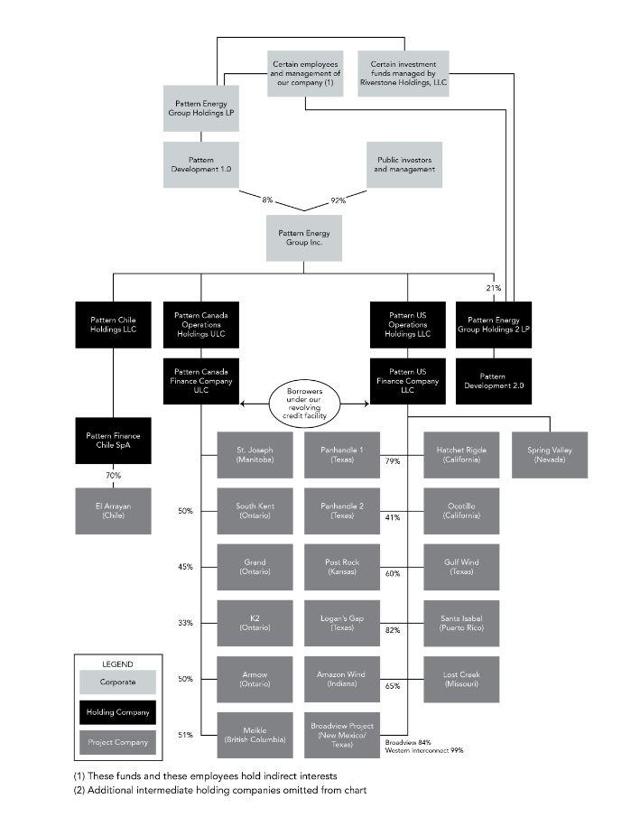
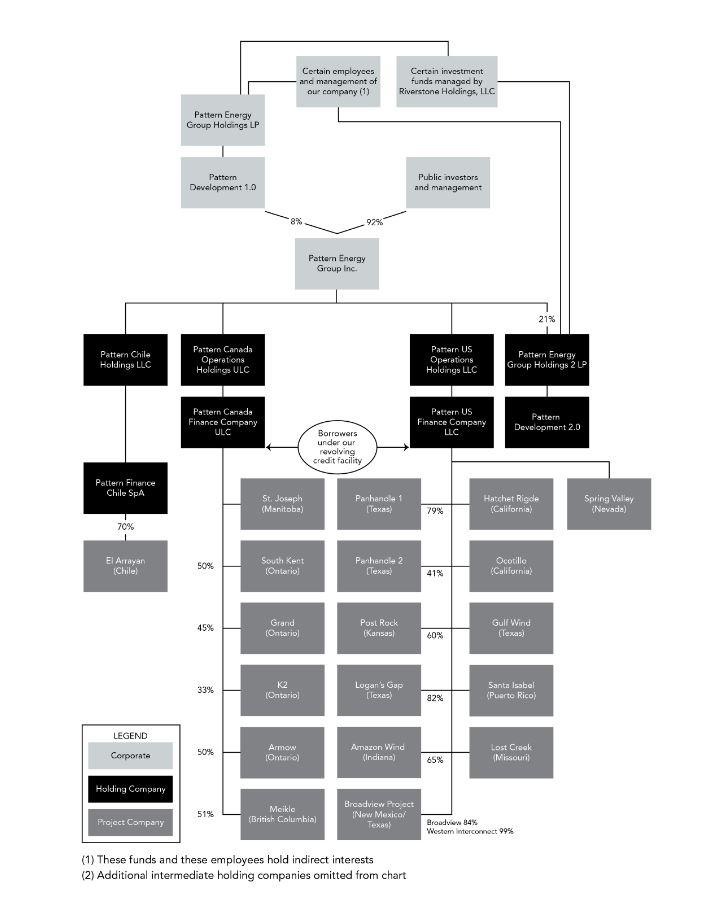
The company has a very complex structure, as shown in this chart from their latest 10K (I'll explain its importance below):

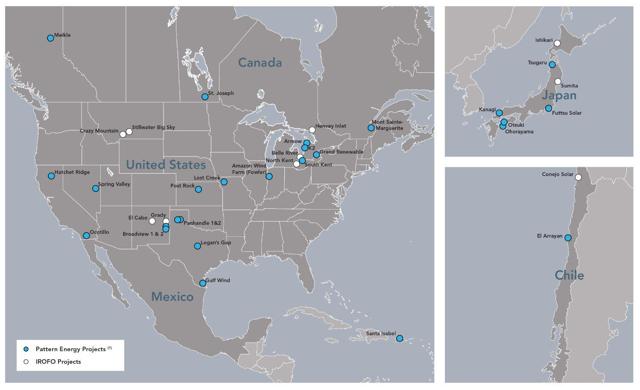
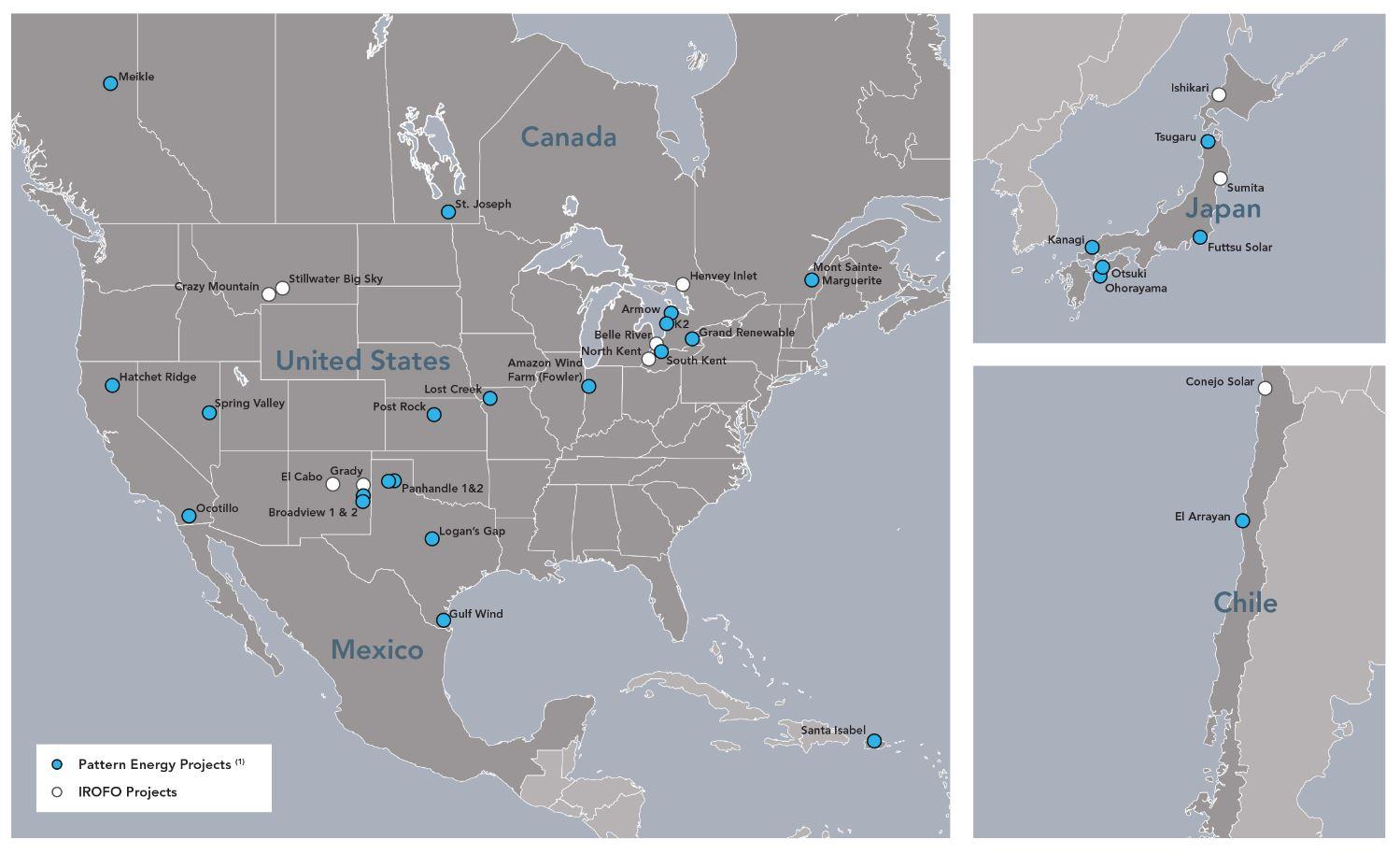
The company is engaged in solar and wind power generation. This map shows the location of all their facilities:

The company owns 25 wind and solar projects that have a little under 3,000 MW of generating capacity. Each project has a long-term contract for "all or a majority of its output." The company has also structured its debt advantageously:

The Company typically finances its wind projects through project entity specific debt secured by each project's assets with no recourse to the Company. Typically, these financing arrangements provide for a construction loan, which upon completion may be converted into a term loan or repaid through capital contributions from the Company and tax equity investors.

Collateral for project level facilities typically include each project's tangible assets and contractual rights and cash on deposit with the depository agents. Each loan agreement contains a broad range of covenants that, subject to certain exceptions, restrict each project's ability to incur debt, grant liens, sell or lease certain assets, transfer equity interests, dissolve, make distributions and change their business. As of December 31, 2017, all projects were in compliance with their financing covenants.


This explains the company's complex corporate structure. What they've done is to (essentially) make each wind or solar project a unique and separate entity. It is financed with its own assets and then establishes long-term contracts. The company pockets the spread between income (supplemented by non-cash charges) and interest payments. Should there be a problem with the contract, creditors will only be able to attach that specific entity, allowing the company's other facilities to remain untouched and out of legal harm's way. This is a very well thought out structure.

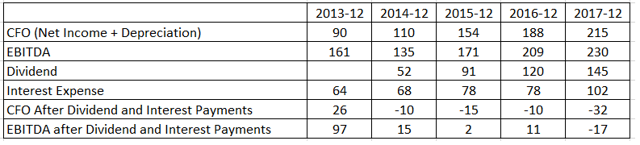
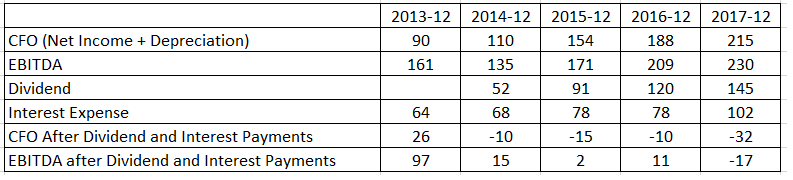
I'm sure that the company's 9%+ yield is attractive. But, it's only natural that dividend investors will see a yield at that level and think, "that can't be safe." As of this writing, there have been no announcements for a dividend cut or an elimination of the dividend. There is a higher probability of that, however. Here is some of the relevant data from their income and cash flow statement (data from Morningstar.com; author's calculations):

The top row shows their cash flow from operations (CFO). I've only added net income and depreciation in order to take a conservative approach (this is actually from one of the older Graham and Dodd Securities Analysis books). I've also included EBITDA from Morningstar's calculations. I've subtracted interest and dividend payments from each; the results are in the bottom two rows. The total after subtracting from CFO is barely negative, which means the company can finance the difference from existing cash, additional debt issuance or one of their credit facilities. The total after subtracting from the EBITDA is just barely positive, save for last year's numbers. Either way, the margin for error is thin. That means that investors should understand the possibility of a dividend cut or suspension is higher than with other utilities. The company acknowledges this point in their latest 10-K under risk factors:

While we believe that we will have sufficient available cash to enable us to pay the aggregate dividend on our Class A shares for the year ending December 31, 2018, we may be unable to pay the quarterly dividend or any amount on our Class A shares during these periods or any subsequent period. Holders of our Class A shares have no contractual or other legal right to receive cash dividends from us on a quarterly or other basis and, while we currently intend to at least maintain our current dividend and to grow our business and continue to increase our dividend per Class A share over time, our cash dividend policy is subject to all the risks inherent in our business and may be changed at any time.


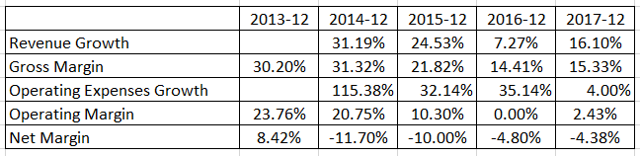
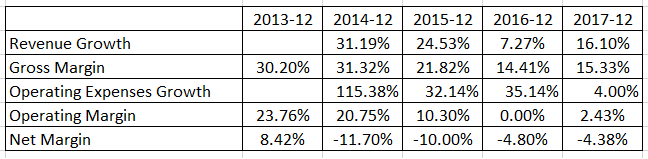
The company, however, is growing at a far faster rate than a traditional utility:

Top line revenue is growing solidly. Their gross margin has dropped to the 14-15% range over the last two years. Operating expenses have increased, which is to be expected as the company has grown. They haven't posted a profit in the last four years, but this company is really more about cash flow than net income at this point.

For investors willing to accept this risk, PEGI offers them a well-structured way to become involved with the alternate energy market. However, they should also realize this utility acts as much as a growth stock as a "widows and orphans" investment.

Friday, March 9, 2018

City of Oakland Provides Solar EV Charging to Employees

Envision Solar International, Inc., a renewably energized EV charging, outdoor media and energy security products company, announced that the City of Oakland, California has recently deployed its EV ARC products, equipped with ChargePoint chargers, to provide emissions free EV charging and emergency power to the city's public works department and emergency response services.

The City of Oakland is committed to sustainable operations overall as well as making their fleet as green as possible. 43% of the City's annual 700,000 gallons of fuel consumed is a low carbon or renewable alternative fuel. The City of Oakland has 26 EVs today and intends to increase that number going forward. As part of the City's ongoing efforts to reduce its carbon footprint and provide clean and reliable power, it intends to use solar as the cleanest fuel available for the City's green fleet and as a potential source of backup power to add resiliency in the event of a power outage or lost access to other fuels.

Invented and manufactured in California, the EV ARC fits inside a parking space, without reducing available parking, and generates enough clean solar electricity to power up to 225 miles of EV driving in a day. The system's solar electrical generation is enhanced by EnvisionTrak, which causes the array to follow the sun, generating up to 25% more electricity than a fixed array. The energy is stored in the EV ARC product's energy storage for charging day or night, and to provide emergency power during grid failure. Because the EV ARC product requires no trenching, foundations or installation work of any kind, it is deployed in minutes and can be moved to a new location with ease.

Thursday, March 8, 2018

¿Son las energías renovables una apuesta confiable para el futuro?


Un gran número de predicciones posicionan las energías renovables en un lugar destacado ya en las próximas décadas. Una nueva investigación, sin embargo, apunta que tales previsiones son probablemente demasiado optimistas y que es necesario tener precaución al contar con las 'energías del futuro'.

En el Reino Unido la proporción de energía suministrada por fuentes renovables aumenta cada año. En 2017, por ejemplo, las fuentes solares, biológicas e hidroeléctricas produjeron la misma cantidad de energía que se necesitó en todo el Reino Unido en 1958.

© REUTERS/ STEPHANE MAHE


Sin embargo, una nueva investigación, llevada a cabo en la Escuela Imperial de Londres, destaca la importancia de tener cautela al basar las decisiones energéticas futuras en modelos demasiado optimistas, como los que predicen que todo el sistema podría funcionar con energías renovables ya a mediados del siglo corriente.

El estudio considera que los modelos para el futuro no siempre reflejan los desafíos del "mundo real". Algunas de esas predicciones, por ejemplo, no consideran la transmisión y el almacenamiento de la energía, ni los requisitos de funcionamiento del sistema.


Utilizando datos del Reino Unido, los científicos pusieron a prueba un modelo de generación de energía 100% renovable para el año 2050.

© AP PHOTO/ AL GOLDIS


Encontraron que, sin otros sistemas confiables de energía "de reserva" (como la energía nuclear o eléctrica), las fuentes de energía renovables fallarían con frecuencia suficiente como para que el sistema sea considerado "inoperable".

Clara Heuberger, autora de la investigación, apunta que "los modelos matemáticos que desestiman los problemas de operatividad pueden inducir a error a los responsables de la toma de decisiones y al público, lo que podría retrasar la transición real hacia una economía baja en carbono".

"Las investigaciones que proponen rutas 'óptimas' para las energías renovables deben ser honestas acerca de sus limitaciones, para que las autoridades tomen decisiones estando verdaderamente informadas", concluye Heuberger.


Sunday, March 4, 2018

The future of energy on islands

Islands are places of exceptional biodiversity and economic value, not to mention their great natural beauty. However, because of their isolation from the mainland, they are also difficult to power. This fact is particularly poignant as Puerto Rico, several months after Hurricane Maria, struggles to turn the lights back on. To prepare for a world in which climate change continues to energize super-storms and sea level rise, islands, on which 10 percent of the world’s population lives, must rethink their energy systems for future success. Read on for several solutions that will allow island communities to thrive in the 21st century.
  • 

Islands currently receive most of their energy from fossil fuels, with some using imported oil, an expensive energy source, to power their electrical grid. With their costs dropping every year, solar and wind could provide cleaner, localized, cheaper energy. Since islands must contend with a limited amount of land, large-scale wind farms may be the preferred utility-scale option. However, neither option will be particularly effective without a battery storage system. To serve this need, Tesla is rolling out battery systems in Puerto Rico, Nantucket and other island communities in hopes that they may someday become ubiquitous.

Related: The sinking island nation of Tuvalu is actually growing

For islands with the appropriate natural resources, such as Iceland, geothermal power is an attractive energy option. New drilling technologies, such as those developed by GA Drilling and AltaRock Energy, could enable geothermal prospectors to dig deeper and ultimately provide greater energy output. While it has drawn criticism from some environmentalists in the past, nuclear power may also be an effective energy source for island communities. The incredible energy density of nuclear fuel translates into a much more effectively shipped power source than fossil fuels, while the newest Gen IV nuclear reactors are passively safe. Nuclear power plants could even be established on ships, similar to nuclear-powered ships and submarines in the United States Navy, allowing power generation to be moved where it is most needed.

Wednesday, February 21, 2018

Scientists develop the first solar fuels reactor that works at night


Researchers have developed the world’s first solarfuels reactor that is able to function at night. Called CONTISOL, the solar fuels reactor is capable of producing fuel such as hydrogen without the intensive greenhouse gas emissions caused by creating the fuel from burning natural gas. CONTISOL is able to run at all hours of the day because it relies on concentrated solar power (CSP), which allows for thermal energy storage. Notably, the reactor uses air, which is abundant, accessible, and non-corrosive, in order to store and transfer heat within the device. “It can pull air in just out of the atmosphere and then runs it through the heat exchanger to store the heat,” explained study lead author Justin Lapp, “and then it can vent that air out once it is cool.”


In a traditional solar fuels reactor, the process depends upon the solar thermal heat provided by the sun. When the sun disappears at night, so too does its energy. Scientists at the German Aerospace Center (DLR) developed their all-hours solar fuels reactor by combining two previously developed systems. “So the main idea of CONTISOL was to build two reactors together,” said Lapp. “One where sunlight is directly doing chemical processing; the other side for storing energy. In the chemical channels, the high temperatures of the material drives the chemical reaction and you get a change from reactants to products within those channels.” This balancing act provides CONTISOL with stable temperatures and an efficient heat source for powering reactions that create fuels like hydrogen.


So far, the team has only developed a small-scaleprototype that is capable of operating at 850 degrees Celsius with an energy output of 5kW. “This scale is a scientific prototype simply for us to understand how to control it. It wouldn’t be commercialized at 5 kW,” said Lapp. “Commercially, 1-5 MW would be about the smallest for industrial-scale reactors, and they could scale to 100 MW or even larger.” Though still in its early stages, a full-scale CONTISOL system would allow for low-impact access to clean hydrogen fuel when fully developed and deployed.


Tuesday, February 20, 2018

An EU Law Change Could Render Home Solar Panels Worthless

European governments have tried various schemes over the past decade to incentivize the installation of home solar panels. Some countries, like the Netherlands, have offered feed-in tariffs – special rates for these consumers to feed electricity into the grid when they don’t need it.

Most governments have treated these small installations differently from big generators, to make it more economically interesting for individuals and communities to install solar panels. Without these special conditions, solar panels could end up costing people more than if they bought their electricity from the grid.

But such incentives could disappear or be severely curtailed under a change in EU law that would treat big utilities and small-scale generators the same. The renewable energy industry is warning that this would pull the rug out from under consumers who have invested in solar panels, and it would discourage potential new installations if they are suddenly subject to lower payments for feeding into the grid, or having to fulfill the same bureaucratic requirements as a large energy utility.

“People would just say, ‘forget it’,” says James Watson, CEO of the Brussels-based industry association SolarPower Europe.

Equal access

The European Commission, the EU’s executive branch, has proposed that as part of a reform of the EU’s electricity market design rules to take effect after 2020, national governments should be required to give equal access to all energy providers and end the practice of regulating prices, leaving the rates paid for feeding energy into the grid to market forces. It would place new obligations on energy generators.

The Commission included an exemption to such “balancing responsibility” requirements for solar installations that have a generation capacity of less than 500 megawats, in order to protect the investments made in home and community solar installations.

However Krišjānis Karins, the center-right Latvian member of parliament who is in charge of the file, is sceptical of these exemptions. An avid free marketeer, he has pushed against these exemptionz for small installations, saying Europe’s energy market needs to be free of state intervention.

Sunday, February 18, 2018

How to make a solar panel with household items


Solar energy is the better option as compared to the electricity. Solar energy is more affordable because it relies on the sun and also it is more environment friendly.
How to make a solar panel at home.
Solar energy has been explored in the past but the efficiency is not as fast as the electricity. This is because sometimes the weather changes. In cold areas it is hard to solely depend on solar energy. Solar panels can be improvised and made from household items. Below is an elaborate procedure of making a solar panel.
How to make a solar panel with household items
The materials needed are;
Two aluminum strips a non coated copper wire is also applicableGlue preferably the permanent glueTape
Glass pieces. They should be two like the slides used in the laboratoryBlackberries or blueberriesSunscreenCandleCupCoffee
Method on how to make a solar panel using foil.
Glue the aluminium strips to the glass slides. The strips should be of equal sizes.Take the bowl, and put the berries in. Mash the berries and extract the berry juiceFilter the juice using the filter and put the filtered juice in a separate cupAfter filtering the juice completely, set it aside for later useTake the slide that is taped with the aluminum foil and then tape the corners.Apply the sunscreen to the taped slide. Apply generously for best resultsSmooth out the sunscreen evenly using any round objectRemove the tape and leave it to dry for around 10 minutes or soAfter it dries up, immerse the slide in the juice that you set aside. Give it around 15 minutesTake the other slide and light the candle. Burn the side that has the aluminum foil completely. This slide will start turning black. Do it until you cannot see through the glass.Take the soaked slide and wipe off the extra juiceTake the soaked slide and add 4 drops of iodine.Take the slide that is coated with carbon and place it on top of the one that has iodine. Take some paper clips and slip the two slides.Take the tape again and cut it into three equal piecesTape the slides three times to ensure that the two slides are held tightly together
You will have created a home made solar panel. This is an answer for how to make a solar panel for school project.
The titanium dioxide will react with the juice and the result is a semi-conductive material. When the light hits this material it causes the carbon and iodine atoms to move in one direction. This causes an electric current of some sort. The above process will make a solar cell. A combination of many solar cells make a solar panel. The more you solder the solar cells together in a series pattern, the more they produce more current.
Some people may wonder how much does it cost to make a solar panel from home?
The answer is very little money because if you have all the above items, you will not need to buy anything to make your solar panel. It is a very easy process that is affordable too.


Square-foot floating solar farm at sea


Around 26,910 square feet of floating solar panels could provide clean energy for the Netherlands. Six Dutch companies and institutions are developing the offshore solar plant, Project Solar-at-Sea, devised byOceans of Energy. The pilot will have $1.48 million in government funding, Reuters reported. Utrecht University will conduct research – as the solar modules are expected to offer a power yield 15 percent greater than they would on land.


Could an offshore solar farm provide renewable energythe Netherlands needs? Six Dutch organizations plan to find out. A pilot project of around 323 square feet ofsolar panels could be in place this summer, around nine miles from The Hague in the North Sea Farm, a testing zone, to scrutinize equipment, energy output, weather conditions, and the impact on theenvironment.

Related: Dutch engineers unveil ‘floating island’ to combat rising sea levels

There are significant challenges in an offshore solar project. Utrecht University solar power expert Wilfried van Sark said in the university’s press release that sometimes the solar panels will be underwater – “when the waves reach heights of ten meters, this is unavoidable. The panels will wobble a bit, too. The impact of those dynamic shifts in tilt angle hasn’t yet been studied, either.” Floating solar farms can be found on lakes around the world, but ones at sea are much rarer.

But there are also benefits to operating a solar farm on the waves. Van Sark said seawater offers a cooling effect, so the yield of the solar panels is anticipated to be higher than on the ground. Oceans of Energy pointed out in their press release a solar farm at sea doesn’t use up valuable land space.

Maritime Research Institute Netherlands (MARIN),Energy Research Center of the Netherlands (ECN),Netherlands Organization for Applied Scientific Research (TNO), and TAQA Energy are also part of the consortium. The team hopes to operate 26,910-square-feet of solar panels by 2021. Inhabitat reached out to Oceans of Energy for project images but they are still confidential; we hope to see them when the pilot project kicks off.

Sunday, February 11, 2018

Germany's Green Energy Production Up 1,000%

Since 1990, the production of "green" electricity in Germany has increased by 1,000% and export rates, according to preliminary data for 2017, just smashed another record.
When Germany was reunified, three electricity sources reigned supreme, namely brown coal that held 31% of the energy mix, hard coal accounting for 26% and nuclear energy standing at 28%, EURACTIV reported.
Renewable energy, mostly hydroelectric, only supplied Germany with 20 terawatt-hours (TWh), less than 4% of all electricity production. After 27 years, the situation looks completely different, especially after the last decade of rapid transformation.
Germany's production of "green" electricity in 2017 amounted to almost 217 TWh, of which almost half (105 TWh) was supplied by wind farms, 46 TWh by biomass combustion, 40 TWh by solar panels and 7 TWh by biogas combustion.
Hydropower production remained unchanged, according to results from German organization AGEB, which brings together German research institutes and industrial organizations.
The results mean that every third kilowatt-hour produced in Germany last year came from renewable energy sources.
Between 1990 and 2017, the production of electricity in German nuclear power plants dropped by half (to 76 TWh); for hard coal it decreased by one third (to 94 TWh) and for brown coal by 13% (to 148 TWh).
On the other hand, electricity production in natural gas-fired power plants increased by 140% (up to 86 TWh), with the plants being able to react quickly to fluctuations in wind and solar energy generation. Germany produces so much green energy that for most hours of the year the Bundesrepublik has the lowest wholesale price for electricity in Europe and is, therefore, a huge exporter of it.
According to preliminary data, AGEB sold 54 TWh of electricity abroad in 2017-the biggest amount in history. Almost half of it was to Austria (including transmitting electricity through the Polish and Czech transit networks).
Some days, electricity prices actually go into the negative and nuclear power plants must reduce their energy generation by as much as half to prevent significant costs mounting up, this was the case on 28 January.

Wednesday, December 20, 2017

Floating solar rig from Columbia University harvests hydrogen fuel from seawater

Engineers at Columbia University have created a “solar fuels rig,” which floats on the ocean, captures solar energy, then uses that energy to extract hydrogen from seawater. Hydrogen is a clean source of energy, though methods to extract it have often proven too costly or energy intensive to be viable. A typical hydrogen extraction system uses water electrolysis, in which H2 and O2 are separated by sending an electric current through water and divided by a membrane, which is usually very delicate. The new floating solar rig does not use a membrane, which makes it resilient enough to deploy on the open ocean.


The lack of a membrane is an important design feature that facilitates a more effective extraction system. “Being able to safely demonstrate a device that can perform electrolysis without a membrane brings us another step closer to making seawater electrolysis possible,” said Jack Davis, co-author of a scientific paper on the device published in the International Journal of Hydrogen Energy. “These solar fuelsgenerators are essentially artificial photosynthesis systems, doing the same thing that plants do with photosynthesis, so our device may open up all kinds of opportunities to generate clean, renewable energy.”

Rather than incorporate a membrane, the device uses an asymmetrical mesh structure in which electrodes, coated with a catalyst on one side, collect bubbles of either hydrogen or oxygen. Once the bubbles are large enough, they are pulled into separate collection chambers. Although the team has yet to test its design on actual seawater, they feel confident in the process. “We are especially excited about the potential of solar fuels technologies because of the tremendous amount of solar energy that is available,” said Daniel Esposito, lead researcher on the project. “Our challenge is to find scalable and economical technologies that convert sunlight into a useful form of energy that can also be stored for times when the sunis not shining.”

Sunday, December 10, 2017

Energía renovable en el futuro

Publicado el 9 de diciembre de 2017 | por Steve Hanley 9 de diciembre de 2017 por Steve Hanley Comencemos diciendo que esta es una historia sobre un experimento de laboratorio que puede ser una buena noticia para los defensores de la energía renovable en el futuro. No tiene aplicación industrial práctica en este momento. Pero cómo un avance tecnológico en el diseño de paneles solares llegó a ser fascinante.  El Dr. Gavin Bell y el Dr. Yorck Ramachers son investigadores en el departamento de física de la Universidad de Warwick en Coventry, Inglaterra. Reconocieron que la tecnología convencional de paneles solares fotovoltaicos ha alcanzado un límite práctico cuando se trata de mejorar la eficiencia y reducir los costos de fabricación. Cualquier ganancia de este punto en adelante es probable que sea incremental en el mejor de los casos. Entonces, la pareja volvió a la investigación y las escrituras de Nikola Tesla y Albert Einstein para ver si el trabajo que esos pioneros hicieron podría indicar el camino hacia un mejor diseño de panel. Un presente, un panel solar se basa en un vacío entre la superficie exterior y las células solares en el interior. ¿Qué pasaría si, Bell y Ramacher se preguntaran, usaron un gas como el argón para llenar ese espacio? Lo que imaginaron era realmente una variación de una moderna ventana de doble acristalamiento. En el prototipo que los científicos construyeron, el panel exterior es transparente y conduce electricidad. El panel interior está cubierto con un material especial desarrollado en el laboratorio que libera electrones cuando se ilumina con luz solar. Llaman a esa capa un "fotocátodo". En presencia de la luz del sol, los electrones son expulsados ​​del fotocátodo y viajan a través del gas. y son recogidos por el panel exterior. El Dr. Bell dice: "Es satisfactorio encontrar un nuevo giro en las ideas que se remontan al comienzo del siglo XX, y como físico de materiales, es fascinante buscar materiales que funcionen en un entorno tan diferente al de los fotocátodos estándar. " Bell y Ramacher esperan que su trabajo actúe como un catalizador para una mayor investigación por parte de los ingenieros de materiales. La composición óptima de la capa de fotocátodo aún no se ha determinado. Aunque, creen que una fina película de diamante sería muy duradera. También piensan que la capa del fotocátodo podría tener una transparencia variable, por lo que es adecuada para ventanas solares. Llenar el interior del panel con un gas inerte como el argón también podría costar menos en la fabricación que crear un vacío. "Creemos que el desafío de los materiales es realmente crítico aquí, así que queríamos alentar a la comunidad científica de los materiales a ser más creativos", dice Bell. "Nuestro dispositivo es radicalmente diferente de la energía fotovoltaica estándar, e incluso se puede adaptar para otras tecnologías ecológicas, como convertir el calor directamente en electricidad, por lo que esperamos que este trabajo inspire nuevos avances". Sabemos que se cansa de escuchar noticias de posibles avances en el laboratorio que prometen mejores baterías de automóviles eléctricos, mejores paneles solares o mejores formas de producir hidrógeno a partir del agua. La mayoría de esos desarrollos nunca salen del laboratorio. Todavía no hay información disponible sobre cuánta electricidad puede generar uno de estos paneles solares de doble acristalamiento llenos de gas, qué tan eficiente puede ser o lo que podría costar. Todas esas respuestas aún deben ser suministradas o descubiertas. Sin embargo, lo que merece nuestra atención es la voluntad de dos científicos de retroceder y hacer un replanteamiento total de la tecnología de paneles solares. Tal vez nada saldrá de su trabajo. Pero, de nuevo, es posible que hayan dado un gran salto en la tecnología de energía renovable. Esta es una historia de un avance hecho en un laboratorio digno de seguir. Fuente: Universidad de Warwick

Tuesday, October 24, 2017

Hacia la batería ultrabarata de agua de mar

En vista de la omnipresencia de las baterías de iones de litio en teléfonos inteligentes y otros dispositivos recargables, es difícil imaginar su reemplazo por pilas de otro tipo. Pero el precio cada vez mayor del litio ha propiciado la búsqueda de alternativas. Una prometedora tecnología de batería utiliza la abundante y fácilmente disponible agua de mar. Ahora, hacer viable esta opción se halla un paso más cerca gracias a un nuevo avance en el diseño de una batería de sodio-aire, basada en agua de mar.

Las baterías de sodio-aire (o sodio-oxígeno) están consideradas como una de las alternativas más prometedoras y rentables a las de iones de litio ya disponibles. Pero quedan algunos retos por superar antes de que puedan convertirse en una realidad comercial. El equipo de Soo Min Hwang y Youngsik Kim, del Instituto Nacional de Ciencia y Tecnología de Ulsán (UNIST), en Corea del Sur, han estado trabajando en estos retos, usando agua de mar como catolito (electrolito y cátodo combinados). En las baterías, el electrolito es el componente que permite que una carga eléctrica fluya entre el cátodo y el ánodo. Un flujo constante de agua de mar hacia dentro y hacia fuera de la batería proporciona los iones de sodio y el agua responsables de producir una carga. Sin embargo, las reacciones logradas de este modo han venido siendo demasiado lentas, de modo que los investigadores se propusieron encontrar una forma de acelerarlas.


[Img #40664]

La nueva batería utiliza agua de mar como catolito. (Imagen: American Chemical Society)

Para la nueva batería, el equipo preparó un catalizador usando nanopartículas porosas de óxido de manganeso y cobalto. Los poros crean una gran área de superficie a fin de propiciar las reacciones electroquímicas necesarias para producir una carga. Como ánodo se utilizó un electrodo de carbono duro. La batería resultante se comportó de forma eficiente a lo largo de 100 ciclos con un voltaje medio de descarga de unos 2,7 voltios. Esto no se acerca todavía al modelo escogido de iones de litio, que puede alcanzar de 3,6 a 4 voltios, pero el avance es un paso clave que permitirá en un futuro cercano cubrir esta diferencia, según los investigadores.

Tuesday, October 17, 2017

Made in Russia: desarrollan un sistema híbrido para generar electricidad con viento y sol


MOSCÚ (Sputnik) — Científicos rusos de la Universidad Nacional de Ciencia y Tecnología (MISiS) con sede en Moscú, diseñaron una instalación energética híbrida que transforma la energía del viento y sol en electricidad, informó el centro docente.

La planta consta de una turbina de eje vertical con paletas que llevan paneles solares fotovoltaicos.

La energía obtenida puede acelerar el giro de la turbina o enviarse al acumulador o a la red externa.

"Nuestra instalación aventaja potencialmente los análogos de EEUU, Europa y China en varios parámetros", afirmó el docente Piotr Lágov, jefe del equipo de investigadores de MISiS.

© FOTO: PRESS SERVICE MISIS

En primer término, explicó, la planta produce hasta un 20 por ciento más de electricidad al utilizar la energía solar y eólica juntas, y en segundo término, si se produce una rotura es fácil de repararla porque la instalación no lleva piezas complejas ni de grandes dimensiones.

La potencia de la planta varía entre 300 y 500 vatios siempre que sean suficientes la intensidad de la luz del sol y la velocidad del viento, lo que permite generar hasta 4 megavatios-hora anuales.