My photo
Lima, Lima, Peru
INGENIERO QUÍMICO HERWARTH RONALD MORALES CHUMACERO - CIP 74980.
Showing posts with label usa. Show all posts

Thursday, April 12, 2018

US slaps 'America First' tariffs on washing machines and solar panels


The US has approved controversial tariffs on imported washing machines and solar panels.

The move is in line with President Donald Trump's "America First" trade policy, which aims to protect local manufacturers from foreign competition.

A spokesman said the administration would "always defend American workers, farmers, ranchers and businessmen".

But China and South Korea, whose manufacturers will be most heavily affected, criticised the move.

US officials said more trade enforcement actions would follow.

Image captionDonald Trump: 'America first, America first'

Mr Trump has talked about taking the action ever since coming to office. In his inauguration speech a year ago he promised to protect US borders from other countries "making our products, stealing our companies and destroying our jobs".

The actions are being seen as the president's most significant trade moves since his decision to pull the US out of the Trans-Pacific Partnership deal (TPP) and renegotiate the North American Free Trade Agreement (Nafta).

Why have the tariffs been imposed?

The tougher policy was approved by President Trump after the US International Trade Commission (ITC) found local manufacturers were being hurt by cheaper imports.

Manufacturing companies - Whirlpool, a US-based maker of washing machines, and the solar firms Suniva and Solar World Americas - had complained to the ITC and it found in their favour.

The tariffs set on solar panels were lower than domestic US producers had hoped for, but the duties on washing machines and parts were steeper than expected - adding as much as 50% in some cases , according to US documents.

Is Trump the WTO's biggest threat?World trade: What will Donald Trump do?What is the World Trade Organization?

How will the tariffs work?

The first 1.2 million imported large residential washing machines in the first year will have a 20% tariff imposed on them, while there will be a 50% tariff on machines above that number.

By the third year, these will drop to 16% and 40% respectively.

Figures suggest that in 2010, 1.6 million washing machines were imported to the US .

Meanwhile, the tariff increase on imported solar cells and modules in the first year will be 30%, falling to 15% by the fourth year, although 2.5 gigawatts (GW) of imported cells - enough for about 11.5 million panels - will be allowed in tariff-free annually.

The ITC said that China had been selling "artificially low-priced" solar components in the US, assisted by state subsidies.

What does it mean for the solar industry?

Taylor Kate Brown, BBC News, Washington

The Trump administration has imposed these tariffs as part of a larger promise to protect American manufacturing - including the solar industry firms that brought the original complaint to the trade commission. But what the "solar industry" means in this context is complicated.

The tariffs were opposed by America's largest solar industry group - the Solar Energy Industries Association (SEIA). SEIA said Suniva and Solarworld had used the complaint to cover for bad business practices - and pointed out the two companies are actually foreign-owned even though the produce panels in the US.

SEIA's position was also driven by the fact the group represents thousands of solar installers - an industry that's seen explosive growth, driven in part because of the dropping cost of panels. Firms that specialise in larger solar "farms" that sell their energy to US utilities are particularly worried about the decision, as they compete directly with coal, natural gas and wind producers.

Ironically, the decision could mean more competition for Suniva and Solarworld, asseveral foreign firms may be interested in moving production to the US .

What has the reaction been?

US appliance maker Whirlpool, which for years has sought protection against cheaper imports from South Korea and Mexico, welcomed the move.

Image captionHow Sharon turned her life around

" This announcement caps nearly a decade of litigation and will result in new manufacturing jobs in Ohio, Kentucky, South Carolina and Tennessee ," chairman Jeff Fettig said in a statement.

Shares in Whirlpool rose 2.5% on the news, and it immediately announced it would employ 200 more people. Shares in US solar panel manufacturers also went up.

Environmentalists argue that making solar panels more expensive risks holding back the development of renewable energy in the country.

China and South Korea have reacted angrily to the news.

South Korea said it would complain to the World Trade Organization (WTO), calling the tariffs "excessive" and "regrettable". Its manufacturers, including Samsung and LG, compete in the washing machine market with US firms such as Whirlpool.

Samsung called the tariffs "a tax on every consumer who wants to buy a washing machine".

Meanwhile China, the world's biggest solar panel manufacturer, said the move would further damage the global trade environment.

China is the US's biggest trading partner and government spokesman Wang Hejun said that Beijing expressed "strong dissatisfaction" with the plans.

He warned that "together with other WTO members, China will resolutely defend its legitimate interests" adding that the plans "not only aroused the concern of many trading partners but was also strongly opposed by many local governments and downstream enterprises in the US".

Monday, March 26, 2018

Study: wind and solar can power most of the United States


Wind, solar, and storage could meet 90–100% of America’s electricity needs

Wind turbines and solar panels. Photograph: Alamy

In order to combat climate change, we need to rapidly move from fossil fuel energy to clean, renewable energy. The two energy sources I am most interested in are wind and solar power; however, there are other sources that have great potential.

Some people doubt how much wind and solar can supply to a country’s electricity grid. This is a particularly challenging question to answer in part because both solar power and wind power fluctuate in both space and time. We all know solar panels work well during the day, when the sun shines – they don’t work so well at night. And wind turbines only send electrons when the wind is blowing.

Fortunately, these two sources of energy fluctuate in ways that complement each other. For instance, solar power generation is highest in the summer and lowest in the winter. Wind power is greatest in the spring and fall. Wind turbines work at night when solar panels are dormant. So, can these complementing variations help balance out the power that the two technologies can provide?

This question was addressed in a very recent paper published in the journal Energy and Environmental Science. The author list included Dr. Ken Caldeira, who is extremely well known for his years of work in environmental science and energy.

The authors analyzed 36 years of hourly weather data (1980–2015) in the US. They calculated the available wind and solar power over this time period and also included the electrical demand in the US and its variation throughout the year.

With this information, the researchers considered two scenarios. In scenario 1, they imagined wind and solar installations that would be sufficient to supply 100% of the US electrical needs. In the second scenario, the installations would be over-designed; capable of providing 150% of the total U.S. electrical need. But the authors recognize that just because a solar panel or a wind turbine can provide all our energy, it doesn’t mean that will happen in reality. It goes back to the prior discussion that sometimes the wind just doesn’t blow, and sometimes the sun isn’t shining.

With these two scenarios, the authors then considered different mixes of power, from all solar to all wind. They also included the effect of aggregation area, that is, what sized regions are used to generate power. Is your power coming from wind and solar in your neighborhood, your city, your state or your region?

The authors found that with 100% power capacity and no mechanism to store energy, a wind-heavy portfolio is best (about 75% wind, 25% solar) and using large aggregate regions is optimal. It is possible to supply about 75-80% of US electrical needs. If the system were designed with excess capacity (the 150% case), the US could meet about 90% of its needs with wind and solar power.

The authors recognized that sometimes these systems generate too much power to be used. Under this situation, you could store the energy for later use. Imagine a solar panel generating excess energy during the day and able to store that power for night use. Power can be stored in several ways, for example in batteries or by pumping water into elevated tanks and then letting the water fall at night and turn a turbine.

The authors modified their study to allow up to 12 hours of US energy storage. They then found that the 100% capacity system fared even better (about 90% of the country’s energy) and the optimal balance was now more solar (approximately 70% solar and 30% wind). For the over-capacity system, the authors found that virtually all the country’s power needs could be met with wind, solar, and storage.

This study considered only wind and solar. If other sources, such as hydroelectricity, biofuels, or even nuclear power were added, it would be relatively straightforward to reach 100% clean energy. Furthermore, people are learning to use energy more wisely, either by using more efficient products or purchasing electricity during off-peak hours. These behavioral changes can also help us reach a 100% clean energy target.

The point is, the use of clean energy to power an entire country (or a group of countries) is achievable. It’s no longer viable to say “we can’t.”

Saturday, February 17, 2018

Buenas noticias fanáticos de Tesla: The Gigafactory finalmente está haciendo baterías


La enorme fábrica de baterías de Tesla ahora está abierta para los negocios. El Gigafactory de la compañía, ubicado en el desierto de Nevada, en las afueras de Reno, comenzó a producir sus primeras baterías, anunció Tesla.
Las baterías producidas allí ayudarán a impulsar el próximo modelo 3 de Tesla y sus productos de almacenamiento de energía.

Tesla está produciendo las baterías junto con Panasonic, que ha realizado una gran inversión en el proyecto. Panasonic también usará celdas producidas en la fábrica en sus productos.
La apertura de la fábrica es una buena noticia para los fanáticos de Tesla que esperan el próximo Modelo 3 de la compañía, que se ha enfrentado a retrasos en la producción. La producción inicial de las celdas que impulsarán el modelo 3 es un paso significativo para hacer que el automóvil sea una realidad, aunque es poco probable que la apertura de la fábrica afecte la fecha de envío prevista para 2018.
El Gigafactory también será clave para los ambiciosos esfuerzos de Tesla en almacenamiento de energía como sus proyectos Powerwall y Solar Roof, que también dependen de baterías de iones de litio.
Aunque los robots hacen gran parte del trabajo en la fábrica, Tesla y Panasonic dicen que hasta 6.500 personas serán empleadas en la extensa fábrica.
BONUS: Faraday Future acaba de presentar a un súper rápido competidor de Tesla: así es como se ve
Una visión general de la nueva Tesla Gigafactory se ve durante una gira de medios el martes 26 de julio de 2016 en Sparks, Nevada. Es la mayor apuesta de Tesla Motors: una enorme fábrica de $ 5 mil millones en el desierto de Nevada que podría casi duplicar la del mundo producción de baterías de iones de litio para 2018.

La ciudad de Las Vegas ya se abastece en un 100% con energías renovables


Las autoridades anunciaron el cumplimiento de un objetivo propuesto en 2008, luego de que entrara en funcionamiento un gigantesco complejo de paneles solares en el sureste de Nevada
21 de diciembre de 2016
La tradicional ciudad del juego y el entretenimiento tardó casi 10 años en depender sólo de energías renovables
Las autoridades de la ciudad en el estado de Nevada, en Estados Unidos, informaron que toda la infraestructura pública, desde los edificios de gobierno hasta las luces en las calles, ya se abastecen de electricidad producida de manera renovable.
"Podemos alardear que la ciudad de Las Vegas es una de las pocas en todo el mundo cuya energía proviene de fuentes verdes", dijo la alcaldesa Carolyn Goodman el lunes en una conferencia de prensa, 
Una de las plantas de energía solar instalado dentro de la ciudad (AP)
La ciudad necesitó de casi una década para lograr este objetivo, con un proyecto que cobró impulso cuando el municipio formó una alianza con la compañía NV Energy el año pasado.
De esta forma, las autoridades pudieron anunciar el logro luego de que el Boulder Solar 1, un gigantesco complejo de paneles solares en el sureste de Nevada instalado por NV Energy, entrara en funcionamiento la semana pasada.
Este complejo sumado a las plantas geotermales y a otros paneles solares instalados en la ciudad proveen ahora el 100% de las necesidades del municipio.Muchas de las casas y negocios particulares, sin embargo, siguen consumiendo energías de otras fuentes.
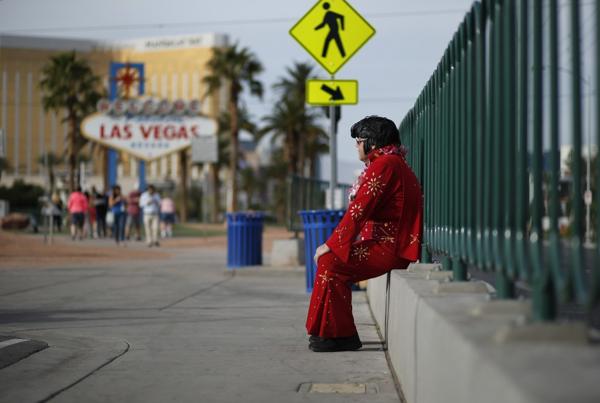
Un ícono de la ciudad que se ha vuelto “verde”; un imitador de Elvis Presley (AP)
Iniciado en 2008, el programa para convertir a "Las Vegas" en una ciudad "verde", la más grande de este tipo en Estados Unidos, ha logrado reducir el consumo de energía en un 30% y le ha ahorrado al municipio unos 5 millones de dólares anuales.
El éxito de "Las Vegas" podría inspirar a otras ciudades en el país tales como San Francisco, San Jose y Grand Rapids, que se comprometieron a producir el 100% de su energía en forma renovable para el 2035.

Wednesday, July 26, 2017

Radical ship with solar panel 'sails' that rotate to face the sun to set sail next year


  • A ship with renewable energy panels instead of sails is set for trials next year.
  • The EnergySail, a rigid sail that sits on a pole, can harness wind and solar energy
  • It can also be used when a ship is at anchor or in port, and withstand high winds
  • It could help reduce fuel costs and lower toxic gas and carbon emissions 

A ship with renewable energy panels instead of sails is set for trials next year. 

The EnergySail, a rigid sail that sits on a pole and rotates to harness both wind and solar energy, could help lower toxic gas and carbon emissions.

The EnergySail can also be used when a ship is at anchor or in port and can withstand high winds, and could help reduce fuel costs

Scroll down for video 

According to Eco Marine Power, the company behind the EnergySail, the sail is a renewable energy platform specifically designed for shipping. 

The sails can be fitted to a range of vessels, from large ships carrying coal and cargo, to naval and coastguard patrol ships.

Monday, November 21, 2016

Solar energy deployment could double in Massachusetts

Massachusetts has recently initiated a proposal under the Baker administration to double solar energy development in the state.

Known as the Next Generation Solar Incentive, the proposal features a bonus paid per kilowatt-hour delivered through a declining block grant model.

The new policy will result in a further 1.6GW of solar PV being deployed, alongside varying rates for projects of different scale.

The commitment to solar development in the Commonwealth was applauded by the Solar Energy Industries Association (SEIA) at a community solar project dedication hosted by Clean Energy Collective.

"For the last decade, Massachusetts has been one of the leading solar energy markets in the nation and with forward-looking policies, like the one governor Baker has proposed, that leadership will be cemented," said Dave Gahl, SEIA's director of state affairs, northeast. "While there are many details yet to be worked out, the new incentive proposal will put the Bay State on a path to having 5GW of solar installed by the year 2025. That's enough to power 800,000 homes."

The proposal is currently under a formal public comment process, and has not been officially instigated yet. It would however be a significant boost to Massachusetts' booming solar industry, which is currently ranked sixth in the country with around 1.2GW of capacity installed.

"There is a solid foundation here upon which to build and we're looking forward to working with the state's leadership to craft a final proposal that includes an extension of the SREC II program so solar projects and the thousands of jobs supporting them do not slip through an unintentional policy gap," Gahl said.

NRG community solar project

In related news, NRG Energy recently brought online the state's newest community solar facility.

The 14.7MW facility provides enough clean electricity to serve more than 1,500 residents in the town of Spencer. Situated on 81 hectares of land in St. Joseph's Abbey, the Spencer community solar farm is 100% subscribed via 20-year agreements with NRG Community Solar. It is the third community solar facility the company has commisioned in the Bay State.

"We welcome the opportunity to be part of this important and sustainable project for renewable energy resources for Massachusetts," said John Stevens, chairman of the Spencer board of selectmen. "Generating electricity from renewable energy offers significant public benefits, energy price stability and health dividends."


NextEra commissions Alabama's largest solar plant

NextEra Energy Resources and the Tennessee Valley Authority (TVA) commissioned Alabama's largest solar offering on Friday - the 75MW River Bend Solar Energy Centre.

The plant produces enough clean energy to power more than 15,000 homes and is comprised of more than 300,000 panels as well as trackers to maximise energy production. The energy generated will serve TVA consumers starting this year, under a 20-year PPA. In addition, during the plant's operational lifespan, it is poised to generate more than US$9 million in property taxes.

A win for Alabama's emerging clean energy industry, the construction phase of the project created around 350 jobs in Lauderdale County and the finished plant will displace around 105,000 tonnes of carbon dioxide emissions annually.

"We are pleased to once again work with our valued customer, TVA, to bring additional renewables into their portfolio with this first project of its scale in Alabama," said Mike O'Sullivan, senior vice president of Development for NextEra. "This 75MW solar project will provide millions in recurring tax dollars in aggregate over several decades for schools and essential services in the region and will generate cost-effective, clean, solar energy for years to come."

Earlier this week, NextEra commissoned 485MW of new solar capacity in California.